Dassault Falcon 900EX: The Complete Buyer's Guide
The Short Version
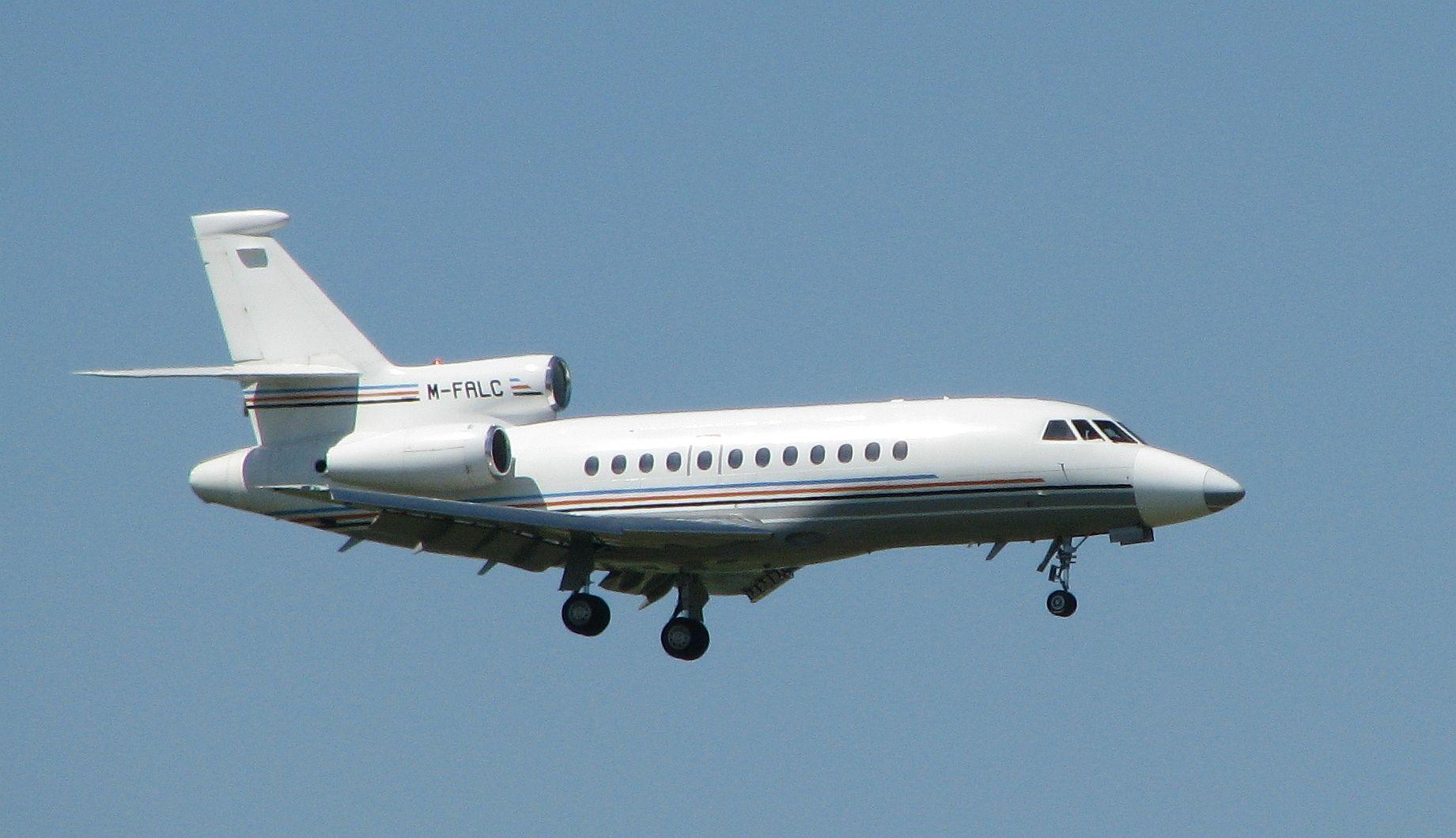
The Dassault Falcon 900EX is a tri-engine large-cabin business jet that sets the standard for reliability and short-field performance in its class. The three Honeywell TFE731-5BR engines deliver 5,000 NM of range, a 51,000 ft ceiling, and Mach 0.90 cruise. The 39-ft cabin accommodates 12–16 passengers in three zones. Pre-owned examples span $7M to $18M depending on year and configuration. The 900EX is a mature platform with an excellent support network — and the third engine provides redundancy that twin-engine competitors simply cannot match.

At a Glance
Operational Reach

What Makes the Falcon 900EX Different
1. Short-field and hot-and-high performance
The Falcon 900EX excels at airports where twin-engine competitors struggle. The third engine provides additional go-around capability and better performance from short, hot, and high-elevation runways — a significant advantage for European operations from Alpine airfields, Middle East ops from shorter strips, and African routes. If your typical mission includes challenging airports, the 900EX's performance envelope is genuinely different.
2. Dassault build quality and resale
Dassault aircraft hold value better than almost any other business jet manufacturer. The 900EX has a strong resale track record — 15-year-old examples still command $8M–$10M where competitors have dropped 40%. The brand carries weight in markets where image matters, and the support network through Dassault Falcon Jet and authorized service centers is excellent.
3. Cabin altitude and passenger comfort
At 51,000 ft cruising altitude, the 900EX maintains a cabin altitude of 5,950 ft — lower than many competitors and designed for passenger comfort on 8–10 hour legs. The 39-ft cabin in three-zone configuration is efficient without being cramped. The wide cross-section (7 ft 8 in) accommodates a full stand-up cabin throughout, with enough width for a double club arrangement in the mid-cabin.
Who Is This Aircraft For?
- ●European operators running from challenging airports — London City, Chambery, Sion, Gando — where the 900EX's short-field capability and balanced field length are decisive advantages over twin-engine alternatives.
- ●Middle Eastern operators who need a reliable aircraft for government shuttle missions, where the Dassault badge carries significant prestige and the tri-engine design provides redundancy requirements for VIP transport.
- ●Long-range missions across 4,500–5,000 NM legs — Dubai to London, Istanbul to New York, Singapore to Frankfurt — where the 900EX covers the mission without the payload restrictions of some competitors.
- ●Buyers who prioritize build quality, brand, and resale value over acquisition price. The 900EX costs more to buy and operate than a Challenger 600 or Legacy 650, but it holds its value and commands more at resale.
When It's Not the Right Fit
- ●If your primary mission is ultra-long-range (6,000+ NM legs), look at the Falcon 7X or 8X. The 900EX's 5,000 NM ceiling limits true transpacific routing — Dubai to Los Angeles or Singapore to New York require fuel stops. For those missions, the 7X or 8X wins.
- ●Operators focused on cost-per-hour economics at 400+ annual hours should compare the 900EX's tri-engine operating costs carefully against twin-engine alternatives. The third engine adds roughly $400–$600 per hour in direct operating costs.
What It Costs to Own and Operate
Acquisition (Pre-Owned)
Annual Fixed Costs
Variable Costs

The Pre-Owned Market Right Now
Market research reviewed October 8, 2026. Figures below retain their source dates and measurement basis.
Dated market benchmark, reviewed October 8, 2026: Duncan Aviation's July 2026 guide gives Falcon 900EX Vref valuations of $6.37M–$7.83M across its listed vintages. This is a model-wide valuation reference, not a reported transaction range or a current seller quote; the upper end for an in-production type can include very new aircraft.
JetsIntel's September 2026 public model list tracks 15 Falcon 900EX aircraft. This describes its market database coverage, rather than the whole operating fleet or an independently verified count of aircraft available today.
Holstein's latest comparative market snapshot, with model sales dates through August 2026, shows 9 months of absorption for the Falcon 900EX. Absorption relates listed supply to the source's measured selling pace and can change as aircraft enter or leave the market.
Holstein's nine-month absorption measure is slower than its four-month figure for the 900LX. Our reading is that the original 900EX presents more supply relative to measured trading activity. JetsIntel separately tracks the 900EX and 900EX EASy; their counts and valuation references should not be merged.
Duncan Aviation / Vref, July 2026 valuations
What to Watch For When Buying
1. TFE731-5BR engine status and trends
The three Honeywell TFE731-5BR engines are reliable but require careful monitoring. Each engine has its own LLP (Life Limited Parts) and HSI schedule. Verify the status of all three engines individually — they may be at different points in their overhaul cycles. Engine program enrollment (Honeywell MSP or equivalent) is critical for cost predictability. Confirm program transferability at sale.
2. Hourly cycle ratio matters
The TFE731 engines are cyclical-limited — meaning the number of flight cycles (takeoffs and landings) matters as much as flight hours. High-cycle aircraft (e.g., 5,000 hours with 4,000+ cycles) have accelerated LLP consumption compared to low-cycle aircraft (same hours but only 1,500 cycles). Review the cycle-to-hour ratio in the logbooks and compare it to the program limits.
3. EASY vs pre-EASY avionics distinction
The flight control system difference between pre-Easy and Easy models is significant. Pre-Easy aircraft have analog flight controls with more limited envelope protection. Easy models have digital flight controls with improved functionality. If upgrading avionics or flight deck, budget accordingly. ADS-B Out compliance should be verified for all aircraft.
4. Maintenance tracking consistency
The Falcon 900EX uses Dassault's own maintenance tracking system or CAMP. Verify that all maintenance events are documented consistently, with no gaps or red marks. A complete and consistent maintenance record is essential for resale and for confirming program compliance. Any gaps should be investigated thoroughly before closing.
5. Interior condition varies widely by operator
Original interiors from the 2000s era are dated by modern standards. The 900EX was often operated in government or VIP roles with high cabin standards, but also saw charter use with faster wear cycles. A full cabin refurbishment for a 900EX — new soft goods, IFE, galley, and veneer — runs $1.5M–$3M. Don't pay refreshed pricing for an original interior. Verify the interior age and condition before closing.
6. Pre-purchase inspection at a Dassault-authorized facility
A Falcon 900EX pre-purchase inspection by a Dassault Falcon Jet service center or authorized MRO (e.g., Associated Air Center, Jet Aviation) is mandatory. Budget $60K–$100K for a thorough inspection covering the airframe, all three engines, avionics, and structural elements. The inspection will give you a complete picture of the aircraft's condition and provide real negotiating leverage if issues are found.
Falcon 900EX vs. The Competition
| Aircraft | Range | Max Speed | Cabin W | Cabin L | Pax | New Price | Pre-Owned |
|---|---|---|---|---|---|---|---|
| Gulfstream G450 | 4,350 NM | Mach 0.885 | 7 ft 4 in | 41 ft | 14–19 | ~$43M (historical) | ~$10M (historical) |
| Embraer Legacy 650 | 3,900 NM | Mach 0.82 | 6 ft 11 in | 42 ft 6 in | 13–16 | ~$42M (historical) | ~$8M (historical) |
| Dassault Falcon 7X | 5,950 NM | Mach 0.90 | 7 ft 8 in | 39 ft 1 in | 12–16 | ~$54M (historical) | ~$18M (historical) |
Gulfstream G450
Embraer Legacy 650
Dassault Falcon 7X
vs. Gulfstream G450
The G450 offers more cabin length (41 ft vs 39 ft) and a wider cross-section for maximum passenger comfort, but gives up 650 NM of range (4,350 vs 5,000 NM) and the Dassault badge. The 900EX wins on range and short-field performance; the G450 wins on cabin volume and Gulfstream prestige. Pre-owned pricing overlaps significantly in the 2005–2012 vintage.
vs. Embraer Legacy 650
The Legacy 650 has a longer cabin (42 ft 6 in vs 39 ft) but gives up 1,100 NM of range (3,900 vs 5,000 NM) and has only twin engines. The Legacy 650 wins on acquisition price and cabin length; the 900EX wins on range, speed (Mach 0.90 vs 0.82), and tri-engine redundancy. For missions over 4,000 NM, the 900EX is clearly the more capable aircraft.
vs. Dassault Falcon 7X
The Falcon 7X uses the same cabin cross-section but offers 950 more NM of range (5,950 vs 5,000 NM), EASY flight controls, and a more modern design. Pre-owned 7X examples from 2007–2012 start at $18M — overlapping with late-model 900EX Easy pricing. The 7X is the upgrade path if you need the extra range and can afford the acquisition premium.
Looking for a Falcon 900EX? Let's talk.
Many aircraft change hands privately. Tell us your requirements and we will source off-market options.
Source a Falcon 900EX →Frequently Asked Questions
5,000 nautical miles at Mach 0.85 with 8 passengers and IFR reserves. That covers routes like Dubai to London, Singapore to Frankfurt, or Istanbul to New York (with a fuel stop). At Mach 0.75 long-range cruise, the 900EX stretches to 5,950 NM.
Reviewed October 8, 2026: $6.37M–$7.83M Vref (July 2026). This is a published model-wide valuation benchmark covering its listed vintages, rather than a completed-sale range. The market overview links the source and explains the sample.
Historical planning estimate; obtain current aircraft-specific pricing. Variable operating costs run approximately $3,400–$3,800 per flight hour depending on fuel prices and maintenance reserves.
Historical planning estimate; obtain current aircraft-specific pricing. The Easy variant (introduced in 2004) features digital EASY flight controls (replacing the older analog system), an upgraded cabin pressurization system, improved galley and interior options, and enhanced performance through software updates. The Easy also has a higher MTOW option. Pre-Easy models are meaningfully less capable and sell for $2M–$3M less than equivalent-age Easy models.
Historical planning estimate; obtain current aircraft-specific pricing. The third engine adds operating cost (approximately $400–$600 per hour in fuel, maintenance, and program costs) but provides genuine redundancy benefits. For VIP transport operations with strict safety requirements, the third engine is a selling point. For pure cost-per-hour economics at high utilization, it's a drawback compared to twin-engine competitors.
Production ended around 2018 as Dassault shifted focus to the Falcon 8X and later the Falcon 6X. The Falcon 900EX remains well-supported through Dassault Falcon Jet and authorized service centers worldwide. Parts availability is good; the platform is mature and well-understood by the maintenance network.
Free Falcon 900EX
Market Report
Get current pricing, active listings, price trends, and Glintero's read on where the Falcon 900EX market stands right now. Delivered to your inbox.
- ✦Current asking prices & 12-month trend
- ✦How many are for sale right now
- ✦Representative listings (sanitized)
- ✦What drives value for this type
Free. No pitch. Just data.
Considering a Falcon 900EX?
No pitch, no pressure. Just twenty years of experience and a straightforward conversation about what fits your mission.
Initiate Private ConsultationLast updated: 2026-10-08