LatestWhen Several Aircraft Brokers Lead to the Same Buyer
Several brokers may offer the same aircraft to one buyer at different prices. How owners can check representation, trace price and terms, and verify demand without exposing the buyer.
Market notes, aircraft analysis, and advisory perspectives for buyers, sellers, and owners.
LatestSeveral brokers may offer the same aircraft to one buyer at different prices. How owners can check representation, trace price and terms, and verify demand without exposing the buyer.
A busy aircraft market can make both sides overconfident. Buyers mistake availability for suitability; sellers mistake attention for conviction. The work that protects a transaction happens before the offer and before the listing.

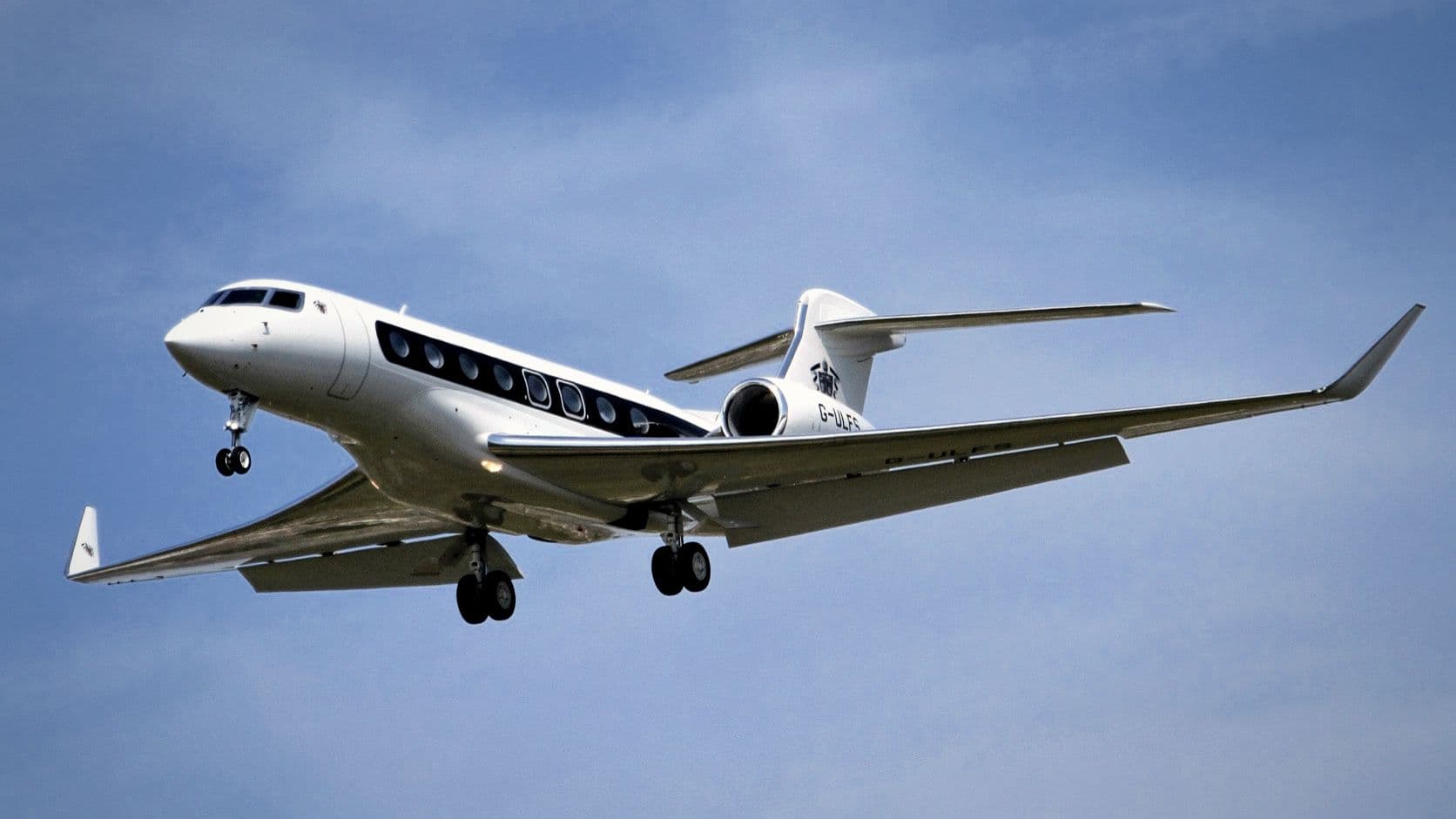
The Gulfstream G650 is no longer a new-aircraft story. For the right buyer, it can still be a serious ultra-long-range acquisition, but only when the mission, inspection position, program coverage, records, cabin relevance, and resale logic all support the decision.

The strongest aircraft sales do not start when the listing goes live. They start months earlier, while the owner is still operating the aircraft and building the evidence a serious buyer will later need.

The Legacy 650 can look like a lot of aircraft for the money. The real question is whether the mission, maintenance position, program coverage, records, cabin expectations, and resale path support the value story.

Aircraft ownership is not just about reducing friction. It is about knowing who protects the owner when acquisition, management, operation, and maintenance decisions start to overlap.

The Challenger 605 can be a smart large-cabin acquisition when the buyer understands what sits behind the asking price: maintenance timing, engine and APU coverage, cabin relevance, records quality, and the five-year ownership picture.

The Hawker 900XP can be one of the clearest value plays in midsize aviation. But the value is only real when the records, engine coverage, inspection timing, and cabin status support the aircraft story.

A serious aircraft sale starts before the listing goes live. Sellers protect value by preparing records, maintenance status, technical disclosures, and the aircraft story before qualified buyers begin diligence.

International business aviation is facing tighter checks on routing, border data, tax responsibility and maintenance records. For buyers, owners and operators, documentation quality is now part of aircraft value.

A smart business jet acquisition should begin with the end in mind. Exit value is shaped by aircraft selection, records, maintenance timing, upgrades, and the way the asset is managed from day one.

Aircraft owners and operators both benefit when there is a clear layer between ownership and operation: one that translates reports, costs, maintenance, availability, and priorities into better decisions.

Q1 2026 transaction data shows a market still running above long-term norms, but buyers are becoming less forgiving. The cleanest aircraft are moving quickly while weaker listings are starting to expose price risk.

In a stable-price market, the buyer who waits for a discount often loses the aircraft. Speed does not mean rushing. It means being prepared before the right aircraft appears.

Most buyers are waiting for prices to drop. They won't. Here's what the data actually shows.

In this market, documentation isn't paperwork. It's the foundation of liquidity. Aircraft with complete records and active program enrollment command meaningful premiums — while undocumented aircraft are being cut off from the majority of their buyer pool.

Jet fuel doubled. Airlines cut 7% of flights. TSA chaos grounded commercial terminals. Business aviation surged 11.3% in a single week. This is not a temporary spike — it is the beginning of a structural shift in who flies private and why.

Pre-owned business jet inventory has fallen to 4% of the global fleet — less than half the 10% benchmark for a balanced market. OEM backlogs stretching to 2029, tariff-driven new aircraft price uncertainty, and disciplined sellers are reshaping the acquisition calculus for buyers globally.

Business aviation's pre-owned market in 2026 is not one market. It's two. Supply-constrained types trade fast, near list price. Aging platforms sit 250–380 days and still don't move. Where you buy determines everything.

In most aviation transactions, your broker is paid by the seller. That is not representation — it is a conflict of interest with a business card. Here is why buyers who pay their own advisor get fundamentally better outcomes.

Business jet shipments were up 11% in 2025. Billings up 16%. Record highs. That is genuinely good news — and it is also when buyers start making expensive mistakes.

Every 2026 trend report says on-demand charter is the future and ownership is outdated. The reality is more nuanced — and the crossover point depends on variables most articles never mention.

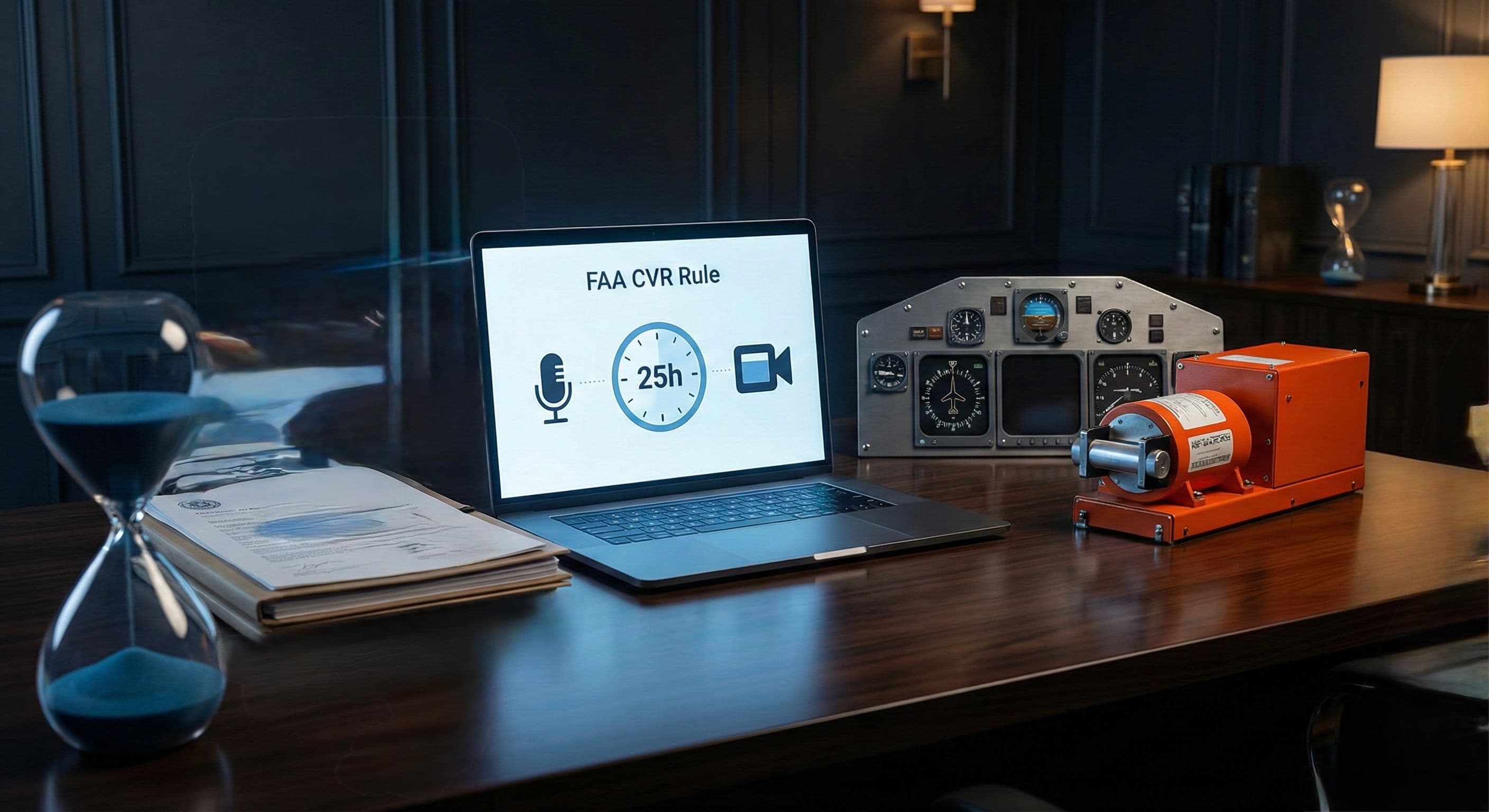
The FAA's final rule on 25-hour cockpit voice recorder retention isn't merely a compliance checkbox. It's a signal of where aviation governance is heading—and a lens through which acquisition timing and operational architecture should be reconsidered.

An inquiry into the preservation of somatic integrity and temporal continuity within the vacuum of trans-hemispheric migration.

An inquiry into the evolution of private mobility from mere transit to a state of optimized physiological stewardship, where the cabin functions as a calibrated extension of the occupant’s own biological imperatives.

Beyond the tactile luxury of the cabin lies a complex architecture of continuity—a silent framework ensuring that the family’s orbital mobility survives the friction of generational transition. True legacy in the private skies is not merely the transfer of an tail number, but the institutionalization of a philosophy regarding time, distance, and the preservation of the family’s sovereign interests.

In an era defined by accelerating complexity and unforeseen contingencies, the true measure of a global private aviation enterprise lies not merely in its operational footprint, but in its capacity for seamless, almost imperceptible adaptation. This discourse delves into the nuanced application of an "invisible hand" – an emergent force born from strategic foresight and integrated systems – to cultivate profound, adaptive resilience.

In the rarefied sphere of private aviation, true distinction is not merely an attribute of the aircraft itself, but an intricate tapestry woven by the exceptional individuals who operate and steward each journey.

In an increasingly complex world, safeguarding one's global aviation movements extends far beyond conventional measures, demanding a sophisticated fusion of advanced security and absolute discretion. This integration is not merely a service; it is a strategic imperative for individuals and entities whose profiles necessitate an uncompromised approach to safety and privacy.

The common narrative surrounding private aviation since 2020 has been one of a relentless, post-pandemic boom. Headlines have focused on surging demand, strained capacity, and a new class of flyers seeking the safety and convenience of private jets. While that surge was real, the story of the 2025 market is far more complex and surprising than just continued high demand.

True mastery of private aviation transcends ownership; it demands a meticulously engineered operational ecosystem, tailored precisely to your mission profile and strategic objectives.

For those operating at the apex of enterprise, an aircraft is less a luxury and more a critical tool, demanding an ownership architecture as sophisticated as the asset itself. This is not about ostentation, but about strategic optimization and impenetrable privacy.

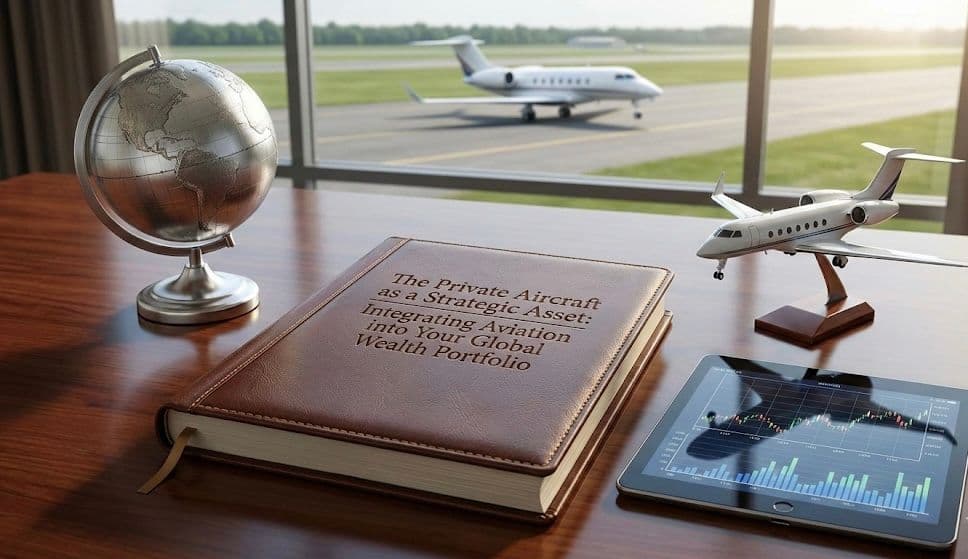
For the globally engaged individual or enterprise, a private aircraft transcends mere luxury, emerging as a critical instrument for maintaining strategic advantage and operational agility across continents.

For a first-time buyer, navigating the high-stakes world of aviation without a seasoned guide isn't just bold; it's a special kind of optimism. You wouldn't represent yourself in a high-stakes lawsuit or perform your own root canal, yet many brilliant business minds think buying a flying machine is a good DIY project.

The global business aviation market is heating up, and for non-US buyers and sellers, the time to act is now. A powerful trend is creating a unique opportunity: strong, time-sensitive demand from the United States. For both sides of the transaction, understanding this dynamic and moving swiftly is the key to a successful outcome.

Deciding whether to purchase a pre-owned or new business jet can be a daunting task. Both options offer distinct advantages and disadvantages, making it crucial to carefully evaluate your needs and preferences before making a decision.

The handover of an aircraft is more than a transaction; it's a pivotal moment that marks the beginning of new horizons for an owner. Aircraft delivery and acceptance involve a meticulous process that ensures the aircraft meets all agreed-upon specifications and is ready for operation.

When it comes to buying or selling an aircraft, having the right partner by your side can make all the difference. Aircraft transactions are complex, involving substantial investments and intricate processes. This is where an experienced and trustworthy aircraft broker, like Glintero, can be your greatest asset. In this blog post, we'll guide you through the essential considerations for choosing the right aircraft broker to ensure a successful transaction.

Selling an aircraft is a significant financial transaction that requires careful planning and execution. To ensure you get the best return on your investment, it's crucial to maximize the value of your aircraft sale. In this article, we'll explore key strategies for achieving top dollar when selling your aircraft.