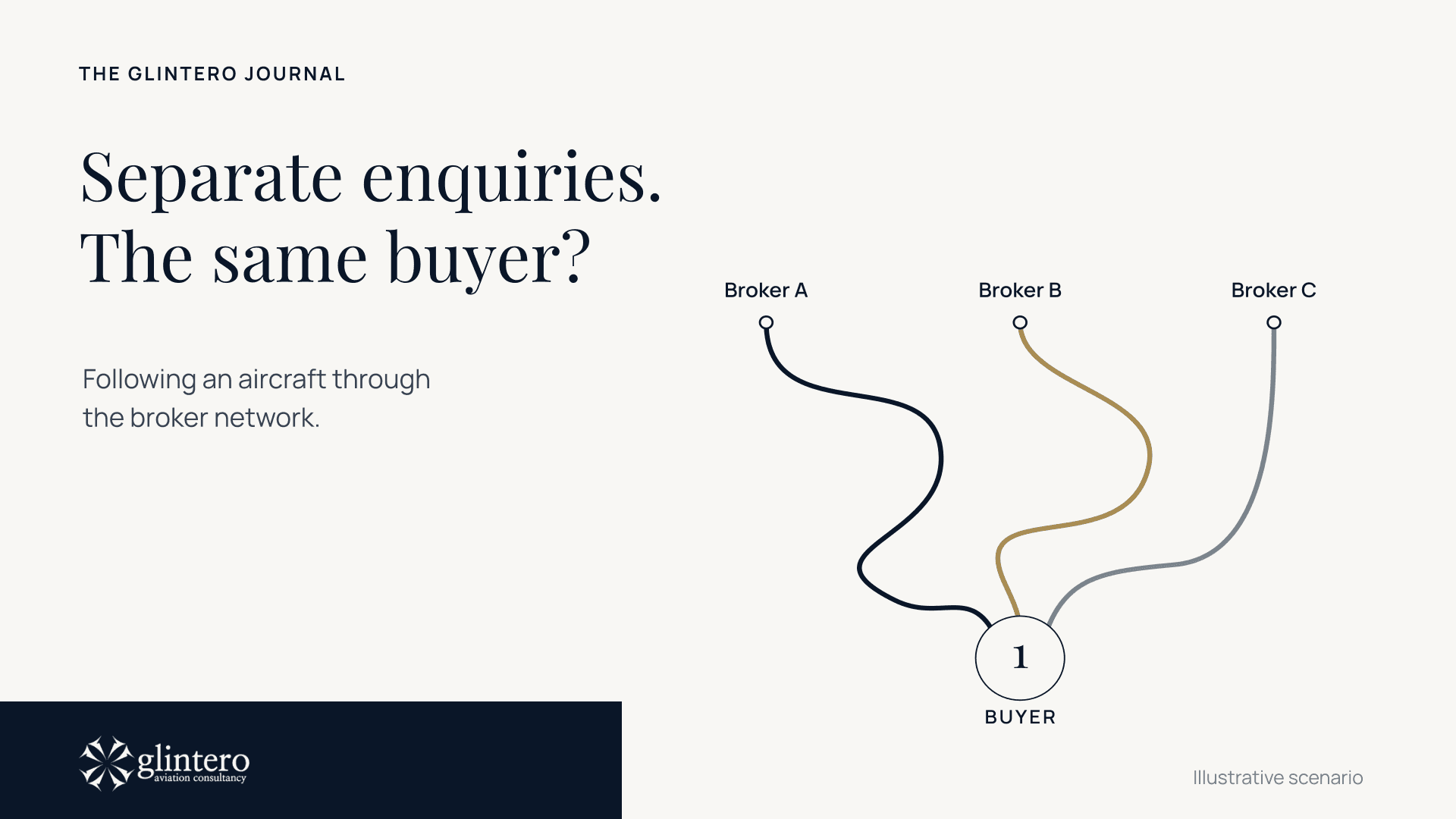
Here's a question most aircraft buyers never think to ask: who is actually paying your broker?
In the vast majority of aviation transactions, the answer is the seller. The seller pays a commission, and that commission gets split — part to the listing broker, part to the "buyer's broker." It looks like you have representation. In practice, you have someone whose paycheck depends on the deal closing.
That's not representation. That's a conflict of interest with a business card.
How the traditional model works against you
When a broker is paid on commission by the seller, their financial interest and your interest are not the same.
You want the right aircraft at a fair price, with a thorough inspection, and the ability to walk away if something doesn't look right. Your broker wants the transaction to close — because no close means no income.
This creates subtle but real pressure at every stage of the deal. The seller's broker pushes for speed. The buyer's broker, paid from the same commission pool, has little incentive to push back. Pre-buy findings become "negotiable." Red flags become "normal for the type." A buyer without independent advice is navigating that alone.
The problem isn't that brokers are dishonest. Most aren't. The problem is that the incentive structure doesn't require them to be honest — it requires them to be persuasive.
The model that actually works
The solution is straightforward: pay your advisor directly.
When you engage a buyer's representative on a fee basis — whether a flat fee, an hourly arrangement, or a retainer — you fundamentally change the dynamic. Their income is not contingent on the deal closing. Their value to you is in their judgment, not their ability to get you to sign.
That means they can tell you when an aircraft isn't worth what the seller is asking. They can recommend walking away from a pre-buy without worrying it costs them their commission. They can spend time researching options that aren't yet listed, watching the market, and telling you to wait — because waiting might be the right answer.
None of that is possible when the only way they get paid is if you buy something.
The case for retainers
The best aviation advisors are worth paying before you're actively looking.
The business aviation market moves fast. Well-maintained aircraft with clean histories and realistic pricing don't sit. By the time a good aircraft hits the public listings, the buyers who were already positioned — who already knew their mission profile, their ceiling, their dealbreakers — have an enormous advantage.
A retainer relationship means your advisor is working in the background when nothing urgent is happening. Watching the market. Building your brief. Flagging aircraft that fit before they're widely available. When the right opportunity appears, you're ready to move with clarity instead of scrambling to get educated under time pressure.
The retainer isn't a cost. It's what buys you the option to act decisively when it matters.
What this looks like in practice
A buyer's representative working on a fee basis should be doing things a commission-based broker has no incentive to do: telling you what a fair price actually is — not just what the seller is asking. Recommending an independent inspection facility, not one the seller knows. Reviewing maintenance records in detail before you commit to a pre-buy. Advising you to walk away when the aircraft isn't right, even if it's close.
That's what transparent representation looks like. And it only happens when the person giving you that advice isn't financially dependent on your decision going one way.
Why it matters in this market
With business aviation at record highs, more buyers are entering the market without the experience to know what they don't know. The traditional model exploits that gap. A fee-based advisory relationship closes it.
You wouldn't hire a lawyer paid by the opposing party to represent you in a negotiation. The aviation equivalent is no different.