In the last week of March, global business jet activity jumped 11.3% year-over-year. North America led at 13.3%. Europe posted 10%. South America surged 23.9%. These are not normal numbers. Normal growth in business aviation is 2–3% annually. Something broke.
What broke is the commercial aviation system — and it broke in multiple places at once.
The fuel shock
The closure of the Strait of Hormuz, through which a fifth of the world's oil supply normally passes, sent jet fuel prices to levels not seen since the 2008 spike. US jet fuel hit $1,710 per metric ton at the end of March — up from $742 a year ago. That is a 130% increase in twelve months.
Airlines responded the way airlines always respond to fuel shocks: by cutting capacity and raising fares. According to Cirium data, more than 7% of all scheduled flights were cancelled in the final week of March. Routes that were marginal became uneconomic overnight. Frequencies dropped. Load factors stayed high because there were fewer seats, not because demand was growing.
For the business traveler who needs to be in Riyadh on Tuesday and Zurich on Thursday, "we cancelled your flight" is not a scheduling inconvenience. It is a deal-killing event. And when first-class fares on surviving routes climb past $15,000 one-way with no flexibility guarantee, the gap between commercial and private narrows fast.
The terminal problem
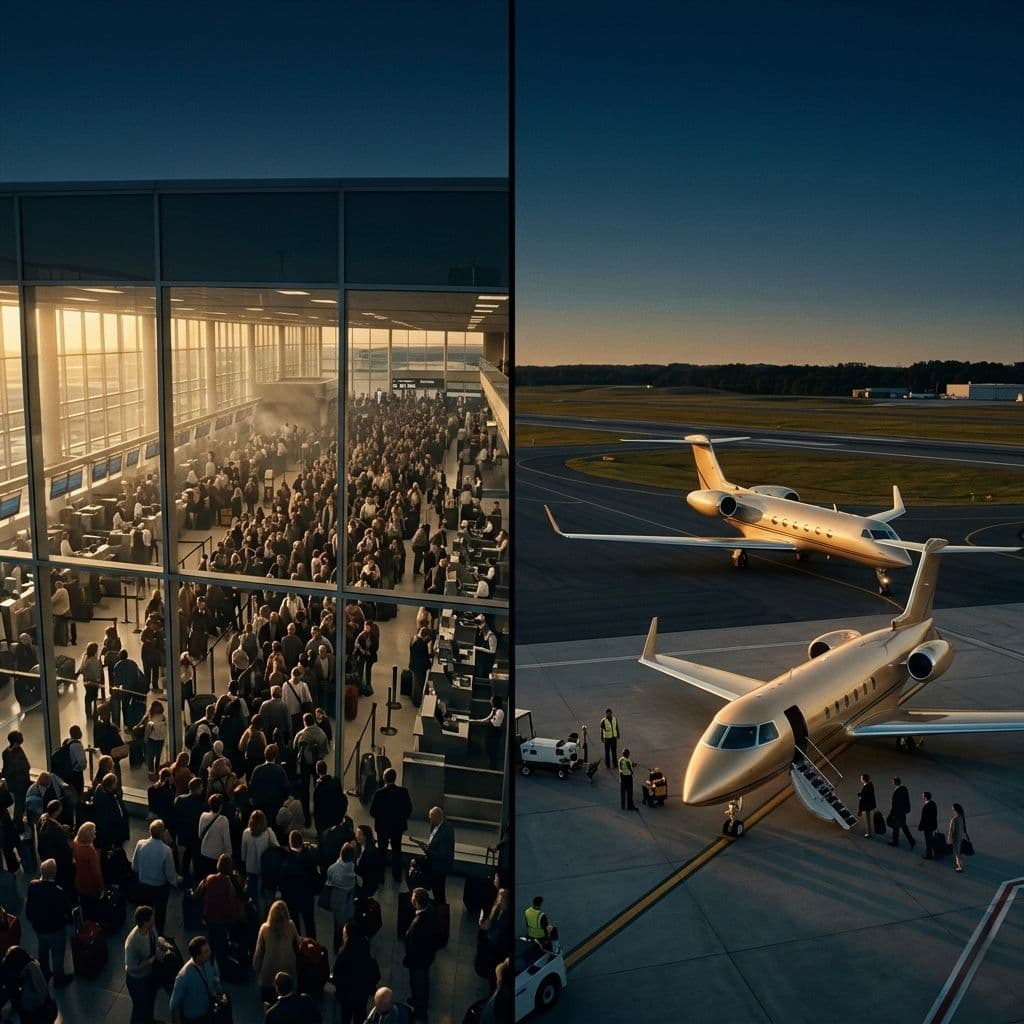
Fuel was not the only failure. TSA staffing shortages across major US hubs turned commercial terminals into processing bottlenecks during one of the busiest travel periods of the year. Security lines that used to take 20 minutes stretched past 90. Passengers missed connections not because their flights were late, but because they could not physically get through the terminal in time.
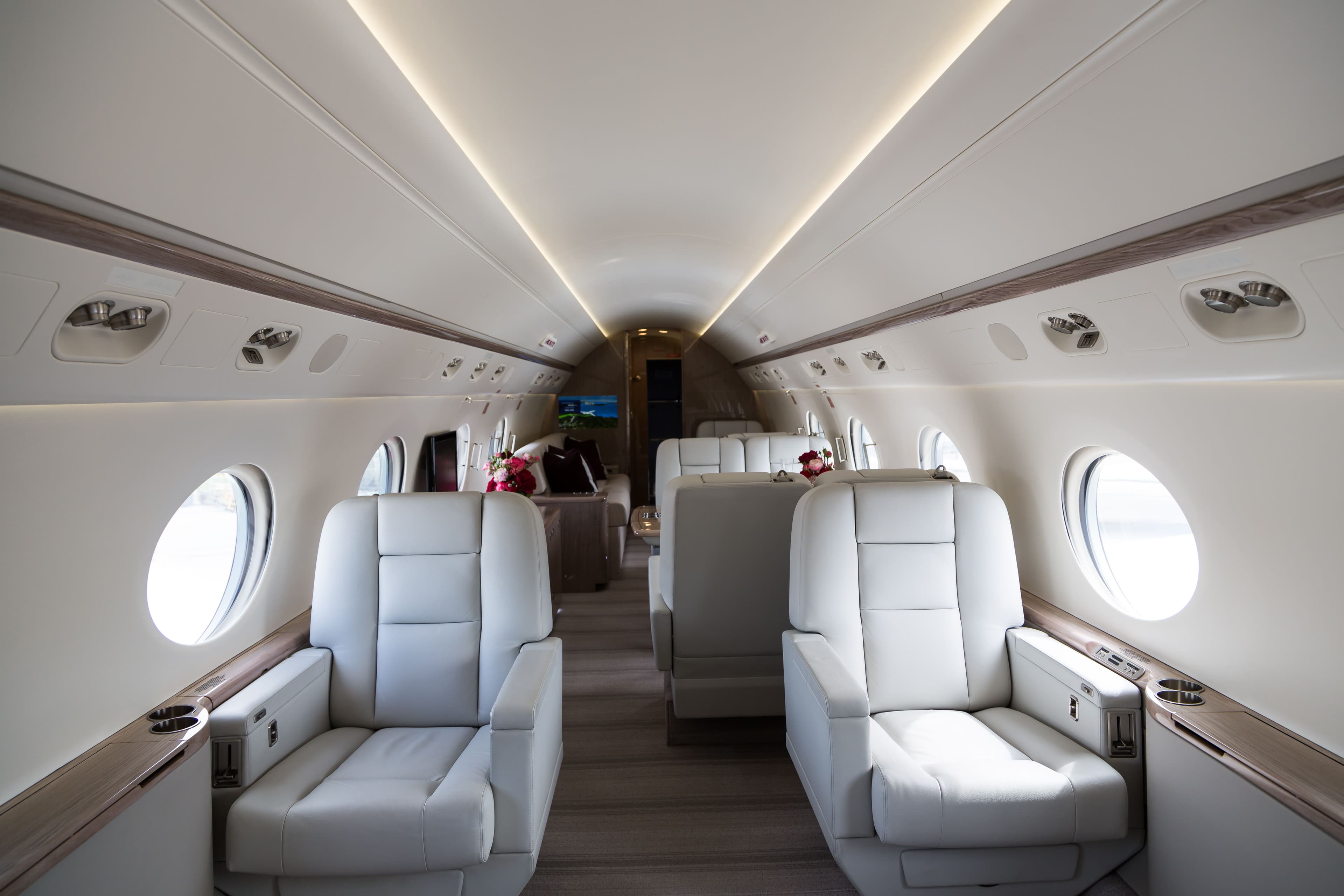
Private aviation bypasses all of it. No security theater. No terminal congestion. No connection dependency. The FBO experience — walk in, board, depart — is not a luxury pitch. In March 2026, it became a reliability argument.
The numbers tell the story
WINGX data across five of the most affected departure cities shows a consistent pattern: scheduled airline departures are down across the board, while business aviation grew in every single market. This is not regional. It is not seasonal. It is structural displacement — commercial passengers migrating to private because the commercial product failed them.
Year-to-date, global bizjet activity is 4.5% ahead of 2025 — itself a record year. That acceleration is notable: the same period in 2025 versus 2024 was 2.2%. The growth rate has doubled, and the March spike suggests it is accelerating further.
The Middle East paradox
Business aviation in the Middle East declined 40.6% year-over-year in Week 13. That sounds catastrophic until you realize the region accounts for roughly 1% of global bizjet departures in any given week. The cumulative drag on global numbers is approximately 0.3 percentage points year-to-date. Strip out the Middle East and global growth would be running at 4.8%.
The conflict is reshaping regional traffic patterns — WingX data shows business jet flights rerouting from Gulf airports to Turkish airports since early March — but it is not suppressing global demand. If anything, the fuel price consequences of the conflict are driving demand higher everywhere else.
What this means for buyers
More demand entering a market with 4% pre-owned inventory moves prices in one direction. The Sandhills Global report for March confirms pre-owned jet inventory fell 8.75% year-over-year. Asking prices dipped 4.9% on average — but that headline masks a split. Late-model, program-enrolled large-cabin aircraft are holding or appreciating. The price declines are concentrated in aging platforms that were already struggling.
For anyone considering an aircraft purchase in 2026, the calculus just changed. First-time buyers displaced from commercial are entering the charter and fractional markets first — but charter availability tightens as demand surges, pushing hourly rates up. Fractional programs are already capacity-constrained. The logical next step for a frequent traveler is whole aircraft ownership or a managed solution.
That pipeline of new entrants, meeting a market where pre-owned supply is at a decade low and OEM delivery slots stretch to 2029, creates sustained upward pressure on both transaction volume and pricing.
Not a blip
The 2020 pandemic created the last structural shift in business aviation demand. That shift was driven by health concerns and remote work. It stuck. Charter hours never returned to pre-pandemic patterns. First-time buyer percentages stayed elevated.
This shift is different in cause but identical in mechanism: a breakdown in the commercial alternative that forces high-value travelers to discover private aviation. Some will return to commercial when the crisis eases. Many will not. Once you experience the FBO, you do not go back to the TSA line voluntarily.
The question is not whether business aviation benefits from the current crisis. It already is. The question is whether you are positioned to act before the rest of the market catches up.
Fuel prices will stabilize. Airlines will restore capacity. TSA will hire staff. But the travelers who crossed over in March are not all going back — and the inventory they are now competing for was already scarce before they arrived.