Bombardier Challenger 300: The Complete Buyer's Guide
The Short Version
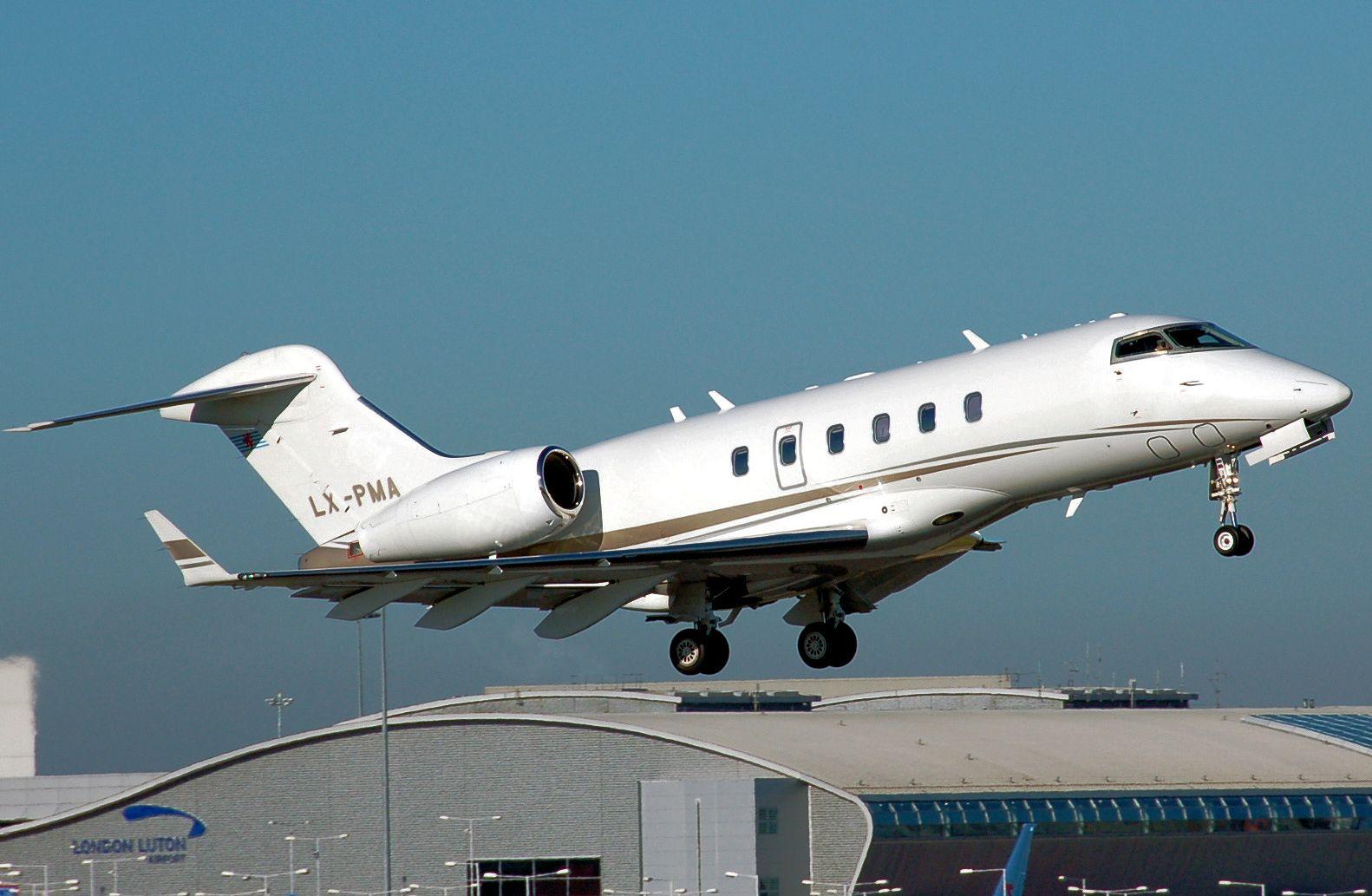
The Bombardier Challenger 300 is a super-midsize business jet that defined its category. Delivered from 2003 to 2014, it carries 8–10 passengers across 3,065 nautical miles at Mach 0.80. Pre-owned examples currently trade between $8M and $14M depending on year, total time, and program enrollment. With 457 aircraft in the active fleet, parts support and maintenance access are excellent. The Challenger 300 is the aircraft that made the super-midsize category viable — reliable, predictable, and still the benchmark against which newer competitors measure themselves.

At a Glance
Operational Reach

What Makes the Challenger 300 Different
1. Category-defining aircraft
The Challenger 300 created the super-midsize category. It was the first business jet purpose-built to offer transcontinental range at a midsize acquisition price. Two decades of operational feedback mean the platform is well-understood by every major MRO. You're not buying an experiment — you're buying a mature, battle-tested aircraft with a deep support ecosystem.
2. Strongest parts network in its class
With 457 aircraft delivered and most still active, the Challenger 300 has one of the deepest parts and maintenance networks in business aviation. Honeywell MSP, Bombardier SmartParts, and independent MROs worldwide all support it. AOG situations are manageable. The cost and complexity of ownership is lower than many competitors with smaller fleets.
3. Competitive acquisition price
The Challenger 300 sits below the Challenger 350 and Citation Latitude in acquisition cost while delivering comparable cabin and range. Pre-owned examples from 2008–2012 are available in the $9M–$12M range — meaningful savings over newer competitors. The economics of owning a Challenger 300 at 200–300 hours per year make more sense than charter at that volume.
Who Is This Aircraft For?
- ●North American and European private operators running 3–5 hour regional missions — New York to Miami, London to Dubai (with a stop), Paris to Moscow — where the Challenger 300's 3,065 NM range covers the mission efficiently.
- ●Flight departments stepping up from light or super-light jets (Citation CJ2+, Premier IA) who need a real stand-up cabin, transcontinental range, and the ability to carry 8–9 passengers in comfort.
- ●Charter and ACMI operators who need a reliable, high-utilization aircraft with strong charter rates and deep maintenance support — the Challenger 300 earns its keep at 400+ hours per year.
- ●Buyers who want Bombardier's brand prestige and a proven platform without paying Challenger 350 or Global 6000 prices.
When It's Not the Right Fit
- ●If your regular missions are over 3,500 NM — Dubai to London, Los Angeles to Tokyo — the Challenger 300 doesn't have the range. You need an ultra-long-range aircraft (G650ER, Global 7500, Falcon 8X).
- ●Buyers who need the absolute latest avionics and cabin modern standards should look at the Challenger 350. The original Challenger 300's Collins Pro Line 21 flight deck shows its age compared to touchscreen-equipped newer aircraft.
What It Costs to Own and Operate
Acquisition (Pre-Owned)
Annual Fixed Costs
Variable Costs

The Pre-Owned Market Right Now
Market research reviewed October 8, 2026. Figures below retain their source dates and measurement basis.
Dated market benchmark, reviewed October 8, 2026: Duncan Aviation's July 2026 guide gives Challenger 300 Vref valuations of $7.19M–$13.09M across its listed vintages. This is a model-wide valuation reference, not a reported transaction range or a current seller quote; the upper end for an in-production type can include very new aircraft.
JetsIntel's September 2026 public model list tracks 41 Challenger 300 aircraft. This describes its market database coverage, rather than the whole operating fleet or an independently verified count of aircraft available today.
The 300 occupies a lower acquisition tier than the 350. Buyers seeking the same broad super-midsize mission can put the price saving toward cabin work and upcoming inspections; later 300s should be compared with early 350s where budgets overlap.
What to Watch For When Buying
1. Honeywell HTF7000 engine trends
The HTF7000 engine is reliable but has specific wear patterns. High-cycle aircraft (charter operators with 3,000+ hours per year) tend to see faster turbine deterioration. Engine LLP (Life Limited Parts) status must be reviewed carefully — HSI (Hot Section Inspection) intervals and LLP replacements are significant costs. An engine with 2,000+ hours since new and no HSI history is a risk. Confirm program enrollment and get engine trend reports from the last 500 hours.
2. AD 2007-13-13 and structural inspection status
Airworthiness Directive 2007-13-13 requires specific structural inspections for certain serial number ranges. Confirm the aircraft has complied with all applicable ADs, particularly AD 2007-13-13 which addresses fuselage structural elements. Request the inspection records and verify them against the aircraft's maintenance status report.
3. Avionics obsolescence
The Collins Pro Line 21 avionics suite in the Challenger 300, while reliable, shows its age compared to modern glass cockpits. FANS 1/A+ and CPDLC are available on most late-model aircraft but verify these are installed and operational. ADS-B Out is required for most airspace now — confirm compliance. Upgrading the avionics post-purchase is expensive (~$500K–$1M) so factor this into your assessment.
4. High-utilization charter history
Many Challenger 300s have been operated in charter fleets at 800+ hours per year. While mechanically acceptable, high-utilization aircraft carry accelerated component wear — especially on high-cycle parts like thrust reversers, landing gear, and flight controls. Request the full logbook history and identify any heavy maintenance events (thrust reverser overhauls, APU changes, winglets damage). Aircraft with consistent single-operator history command a premium.
5. Connectivity is now expected
The Challenger 300 came standard with older satellite communications (Airsat or similar). Modern buyers expect Gogo AVANCE L3/L5, Ka-band (Honeywell JetWave), or Starlink-equivalent connectivity. If the aircraft lacks modern Wi-Fi, budget $150K–$400K for an upgrade, or use it as negotiating leverage. This is especially important if the aircraft serves charter clients who expect connectivity as standard.
6. Pre-purchase inspection is mandatory
A Challenger 300 purchase without a pre-purchase inspection by a Bombardier-authorized MRO (e.g., Duncan Aviation, Planemakers, EAM) is never advisable. Budget $50K–$80K for a thorough inspection covering structural, avionics, engine borescope, and maintenance program status. The inspection findings will give you real negotiating leverage or a clean exit from a problematic aircraft.
Challenger 300 vs. The Competition
| Aircraft | Range | Max Speed | Cabin W | Cabin L | Pax | New Price | Pre-Owned |
|---|---|---|---|---|---|---|---|
| Bombardier Challenger 350 | 3,200 NM | Mach 0.83 | 7 ft 2 in | 28 ft 6 in | 9–10 | ~$27M (historical) | ~$14M (historical) |
| Cessna Citation Sovereign+ | 3,200 NM | Mach 0.80 | 6 ft 8 in | 25 ft 3 in | 8–10 | ~$24M (historical) | ~$9M (historical) |
| Embraer Legacy 450 | 2,900 NM | Mach 0.82 | 6 ft 8 in | 26 ft | 9–10 | ~$22M (historical) | ~$8M (historical) |
Bombardier Challenger 350
Cessna Citation Sovereign+
Embraer Legacy 450
vs. Bombardier Challenger 350
The Challenger 350 replaced the 300 and offers more range (3,200 vs 3,065 NM), better fuel efficiency, and modern avionics. Pre-owned examples from 2014 onward are available from ~$14M. The 300 is meaningfully cheaper at $8M–$14M and covers the same mission for most operators. If you fly 500+ hours per year and want lower operating costs, the 350's fuel efficiency pays back over time.
vs. Cessna Citation Sovereign+
The Citation Sovereign+ overlaps Challenger 300 pricing in pre-owned but offers a slightly longer range (3,200 vs 3,065 NM). The cabin is narrower (6 ft 8 in vs 7 ft 2 in) and shorter (25 ft vs 28 ft). The Challenger 300 is the more capable aircraft for passenger comfort; the Sovereign+ wins on range and acquisition price in the 2006–2008 vintage.
vs. Embraer Legacy 450
The Legacy 450 offers a slightly wider cabin than the Sovereign+ but gives up 165 NM of range compared to the Challenger 300. Pre-owned examples overlap the Challenger 300 price range significantly. The deciding factor is mission profile — if your routes are consistently under 3,000 NM, the Legacy 450 deserves consideration. For anything approaching 3,000+ NM legs, the Challenger 300's range advantage holds.
Looking for a Challenger 300? Let's talk.
Many aircraft change hands privately. Tell us your requirements and we will source off-market options.
Source a Challenger 300 →Frequently Asked Questions
3,065 nautical miles at Mach 0.80 with 8 passengers and IFR reserves. That covers routes like New York to Los Angeles, London to Dubai (with a fuel stop), or Miami to São Paulo.
Reviewed October 8, 2026: $7.19M–$13.09M Vref (July 2026). This is a published model-wide valuation benchmark covering its listed vintages, rather than a completed-sale range. The market overview links the source and explains the sample.
Historical planning estimate; obtain current aircraft-specific pricing. Variable operating costs run approximately $2,490–$2,700 per flight hour depending on fuel prices and maintenance reserves.
Historical planning estimate; obtain current aircraft-specific pricing. The Challenger 350 has more range (3,200 vs 3,065 NM), new winglets, updated Honeywell Primus Apex avionics, and lower fuel burn per hour. The cabin dimensions are nearly identical. Acquisition prices for the 350 start about $3M above equivalent 300 examples.
Honeywell MSP (Maintenance Service Plan) covers engine and APU. Bombardier SmartParts covers scheduled parts and labor for the airframe. Most well-maintained Challenger 300s are enrolled in both. Full program enrollment is a key value indicator — it means the maintenance history is tracked and predictable.
No. Bombardier ended Challenger 300 production in 2014, replacing it with the Challenger 350. The fleet is aging but parts support remains excellent through Bombardier, Honeywell, and independent MROs worldwide.
Free Challenger 300
Market Report
Get current pricing, active listings, price trends, and Glintero's read on where the Challenger 300 market stands right now. Delivered to your inbox.
- ✦Current asking prices & 12-month trend
- ✦How many are for sale right now
- ✦Representative listings (sanitized)
- ✦What drives value for this type
Free. No pitch. Just data.
Considering a Challenger 300?
No pitch, no pressure. Just twenty years of experience and a straightforward conversation about what fits your mission.
Initiate Private ConsultationLast updated: 2026-10-08